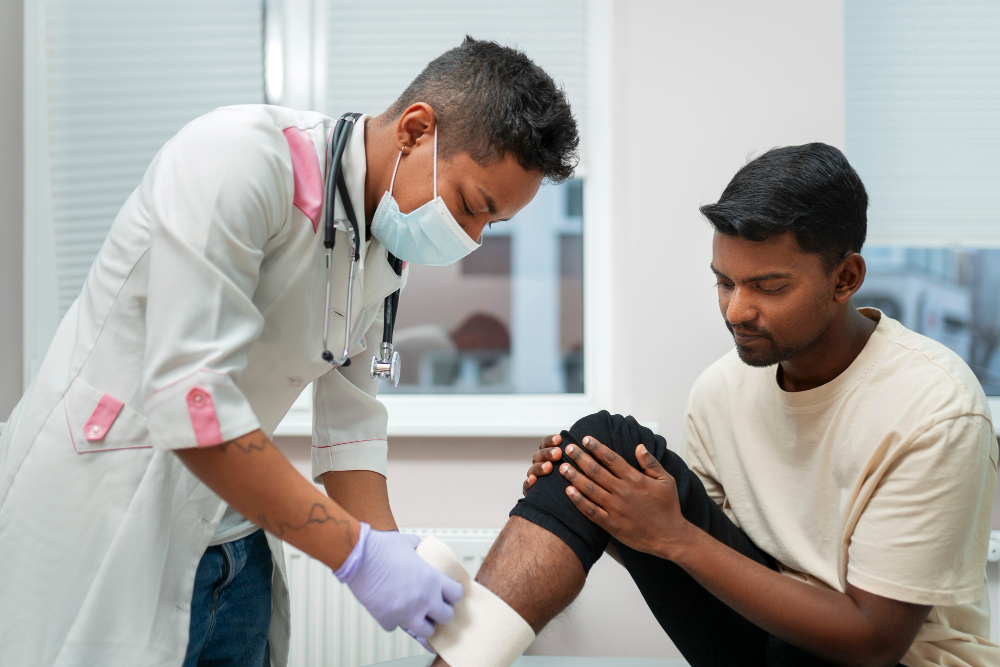
Orthopedic injuries are common, especially sprains and strains. These injuries affect muscles, ligaments, and tendons. Early and proper treatment for sprains and strains can help you heal faster. If left untreated, these injuries may cause long-term problems. Understanding orthopedic injury treatment is important for a quick recovery and to avoid further harm.
What Are Sprains and Strains?
Sprains and strains are two types of soft tissue injuries. A sprain happens when a ligament, which connects bones, gets stretched or torn. A strain is when a muscle or tendon, which connects muscles to bones, is stretched or torn.
Often, these injuries occur during sports, exercise, or daily activities. For example, you might twist your ankle while walking or lifting something heavy. Some people are at higher risk, such as athletes or those who do not warm up before activity. Weak muscles and poor balance can also increase your risk.
Symptoms of Sprains and Strains
Both sprains and strains can cause pain and swelling. However, there are some differences. Common symptoms include:
Usually, sprains affect joints like the ankle, knee, or wrist. Strains often affect muscles in the back, legs, or arms. If you notice muscle spasms, it is likely a strain. But if you cannot move a joint, it may be a sprain.
Diagnosis of Orthopedic Sprains and Strains
Doctors use several steps to diagnose orthopedic injuries. First, they ask about how the injury happened. Next, they perform a physical exam to check for swelling, pain, and movement. Sometimes, they may order imaging tests. For example, an X-ray can rule out broken bones. An MRI or ultrasound can show soft tissue damage. These tests help doctors decide the best treatment for sprains and strains.
Treatment Options for Sprains and Strains
Early treatment is important. The RICE method is often the first step:
Sometimes, over-the-counter pain medicines help with discomfort. However, if pain or swelling does not improve, you should see a doctor. Severe injuries may need a brace, splint, or even surgery.
Physiotherapy for orthopedic injuries is very helpful. A physiotherapist can teach you gentle exercises to restore movement and strength. Gradually, you can return to normal activities. Rehabilitation also lowers the risk of future injuries.
Prevention and Lifestyle Tips
Preventing sprains and strains is possible with some simple steps. For example, always warm up before exercise. Stretch your muscles and joints to keep them flexible. Wear proper shoes for your activity. In addition, keep your home and work areas free of tripping hazards.
Here are more tips to help prevent orthopedic injuries:
Staying active and safe can reduce your risk of sprains and strains.
When to Consult a Specialist
Sometimes, you need expert help. Watch for these warning signs:
If you notice any of these, consult a specialist right away. Early care can prevent long-term problems.
Conclusion and Call-to-Action
In summary, orthopedic injuries like sprains and strains are common but treatable. Early care, proper treatment, and prevention can speed up healing. Remember, consult a physiotherapist or orthopedic specialist for personalized guidance.
